
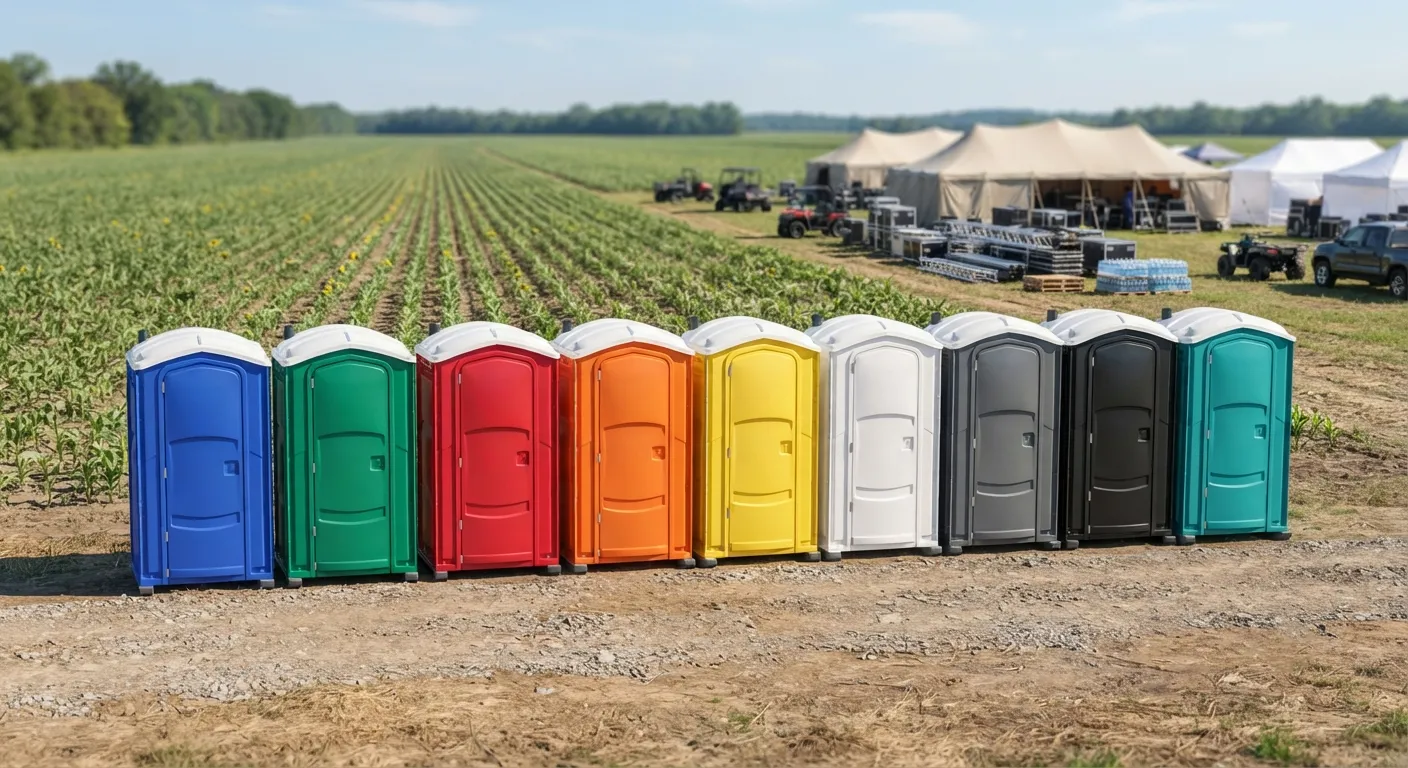
How many restrooms does a farm crew need?
Federal rule OSHA 1928.110 covers field sanitation for hand-labor agricultural work: potable water, toilets, and a handwashing station for every 20 employees, and none of it more than a quarter mile from where people are working. That's a tighter walk requirement than most construction sites deal with, since row crop and orchard labor spreads workers out across acreage instead of one job site. If your operation runs closer to a packing shed or a fixed yard, the general toilet ratio in OSHA 1926.51(c) still applies as a baseline: one unit per 20 workers, scaling up from there. Newport News Porta Pros places standard porta potty rental units at the field edge, near equipment staging, or split across multiple pick zones so nobody walks farther than the rule allows. For bigger operations with 40 or more seasonal hands, a portable restroom rental plan usually mixes standard units with a handwashing station rental at each cluster. Water has to be potable per OSHA 1926.51(a)(1), and soap with a towel or drying device is required under 29 CFR 1910.141(d)(2); hand sanitizer alone doesn't satisfy that. Farms near Smithfield, 18.9 miles southwest of Newport News, and operations closer to Carrollton, 15.1 miles south, both fall under the same federal rule regardless of which side of the city line the acreage sits on. Check the how many porta potties do I need guide before harvest to size the count against crew shifts.
What does a farm restroom rental cost?
Pricing depends on unit type, how long the season runs, and how many stops the driver has to make across your acreage. A single standard unit runs about 100 to 350 dollars a day depending on service frequency, but most farms rent by the week or month once harvest labor is locked in.
| unit | day | week | month |
|---|---|---|---|
| standard | 100-350 | 130-500 | 125-325 |
| deluxe | 85-1200 | 150-290 | -- |
| ada | 200-400 | 120-240 | -- |
A monthly porta potty monthly rental plan tends to run cheaper per week than booking single days, which matters if your harvest window stretches six weeks or more. Delivery adds a separate fee, typically 100 to 500 dollars depending on distance and how many units go out in one trip; farms farther out toward Rushmere, 28.5 miles west of Newport News, should expect the higher end of that range. If you're comparing options before committing, the porta potty rental cost and porta potty rental per day pages break down what drives the difference between a one-day rental and a season-long lease. Some operations near Newport News also run a mixed order: a couple of standard porta potty rental units for field hands and one ADA accessible porta potty unit near the packing shed, since ADA Standards section 213.2 requires at least 5 percent of a clustered group to be accessible, with a minimum of one unit no matter how small the cluster is.
Where should units go on a working farm?
Placement matters more on a farm than almost anywhere else Newport News Porta Pros delivers. Ground has to be level and stable, delivery trucks need roughly 60 feet of straight clearance to drop a unit near a barn or loading area, and units can't sit in a spot that blocks tractor paths or harvest equipment turning radius. A standard unit measures about 44 by 48 inches on the ground and stands 92 inches tall, small enough to tuck at a field edge without eating into planted rows. For accessible units, ADA Standards section 304.3.1 calls for a 60 inch turning circle and section 405.2 limits any ramp to a 1:12 slope, both worth checking if a unit sits near a packing shed with uneven grading. The porta potty placement guide covers ground conditions in more detail, and the porta potty permit requirements page is worth a look if any unit will sit near a public road frontage rather than fully on private acreage. Farms running seasonal labor camps sometimes need more than toilets: a portable sink rental or two near the bunkhouse, a storage container rental for tools and supplies, or temporary fence rental around equipment yards. Operations closer to Williamsburg, 23.2 miles northwest of Newport News, or Poquoson, 15.2 miles east, still get the same delivery and placement standards regardless of distance from the shop.
How often do units get serviced during harvest?
Weekly service is the baseline under ANSI/PSAI Z4.3 for up to 10 users across a 40 hour week, but harvest crews running longer hours or bigger headcounts usually need twice-weekly pumping. Ask about a custom schedule when you book; Newport News Porta Pros adjusts frequency based on actual crew size, not a flat default.
Can we rent just for one harvest season?
Yes. Most farm accounts run a seasonal lease rather than a year-round contract, paying the monthly rate while crews are active and pausing between seasons. That avoids paying for idle units through winter fallow periods.
Do farm restrooms need to be ADA accessible?
If units are clustered for workers or visitors, ADA Standards section 213.2 requires at least one accessible unit per cluster, even in a small group. Field-only crews without public access may not trigger this, so ask Newport News Porta Pros to confirm based on your layout.
What size tank does a standard unit have?
A standard unit holds a 60 to 70 gallon tank, enough for typical crew use between weekly services. Heavier use during peak harvest may call for added visits rather than a bigger tank.
Does the farm need handwashing stations too?
Yes, under OSHA 1928.110 for hand-labor agricultural work. A handwashing station rental paired with each toilet cluster keeps you compliant and keeps crews from carrying dirt into packing areas.
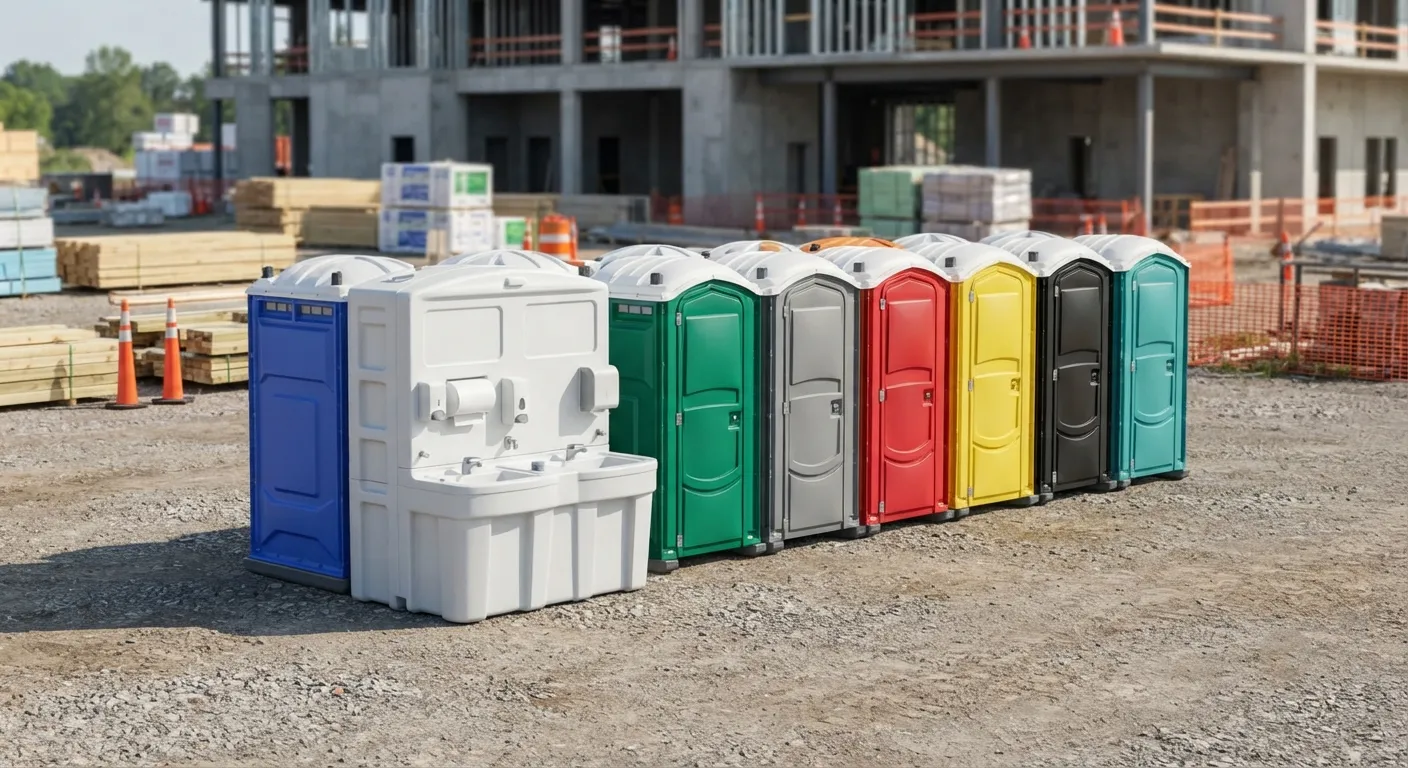
Next step
Get a delivery date
Tell us the address, the dates and the headcount. We size the order and confirm the route.